

You invested time and money into your website. It looks professional, your services are clearly listed, and you may even be getting visitors from Google or social media.
So why is your Website Not Generating Leads??
This is one of the most common frustrations for business owners:
“My website is getting traffic, but nobody is contacting me.”
The problem is not always traffic.
In many cases, potential customers are already visiting the website but leaving before taking action. Your website may be difficult to use, slow, unclear, poorly targeted or simply failing to give visitors a compelling reason to contact you.
A successful business website should do more than look good. It should help potential customers understand what you offer, why they should trust you and what they need to do next.
If your website is not generating leads, here are 10 important problems to check.
1. You Are Attracting the Wrong Website Visitors
Getting more traffic does not automatically mean getting more leads.
For example, imagine you own an accounting business in Johannesburg, but most of your website visitors are searching for free accounting templates, student information or general definitions.
Those visitors may increase your traffic numbers, but they may never become customers.
Your website needs to attract people with the right search intent.
Someone searching:
“What is bookkeeping?”
is looking for information.
Someone searching:
“Bookkeeping services Johannesburg”
is much closer to hiring a service provider.
What to check
Look at the keywords bringing people to your website and ask:
- Are these people looking for the services I sell?
- Are they located in areas where I provide services?
- Are my service pages targeting commercial search terms?
- Does my content answer questions that potential customers ask before making a purchase?
SEO should not only focus on increasing traffic. It should focus on attracting people who are likely to become customers.
Helpful next step: If your website is attracting the wrong audience, improving your SEO strategy and keyword targeting can help you attract more relevant visitors.
2. Your Website Does Not Clearly Explain What You Do
Visitors should not have to spend several minutes trying to understand your business.
When someone lands on your website, they should quickly be able to answer three questions:
- What does this business do?
- Who is this service for?
- How can they help me?
A vague headline such as:
“Welcome to Our Website”
or:
“We Deliver Innovative Solutions”
does not clearly explain the value you offer.
Compare that with:
“Professional SEO and Web Design Services for Businesses in Johannesburg”
The second example immediately provides more context.
What to check
Review your homepage and ask:
- Can someone understand what we do within a few seconds?
- Do we clearly explain our main services?
- Does the website address customer problems?
- Is our value proposition easy to understand?
Your website copy should focus on your customer’s problem before explaining your solution.
For example:
Struggling to get enquiries from your website? We design high-performing websites built to attract the right audience and turn visitors into leads.
Clear messaging can make a significant difference to how visitors interact with your website.
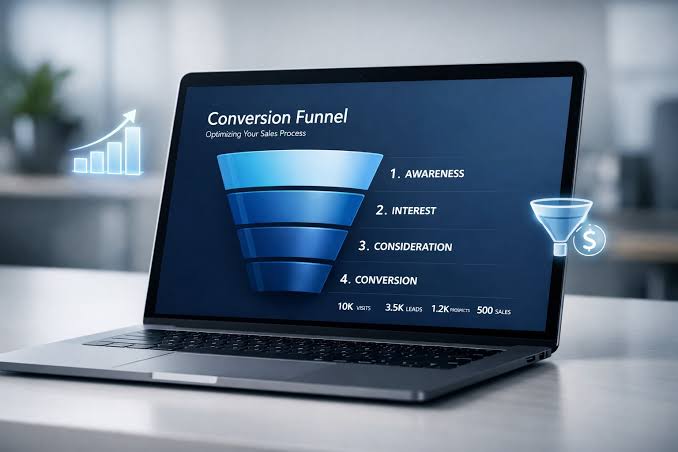
3. Your Website Looks Good but Is Not Designed to Convert
A beautiful website is not necessarily a high-performing website.
One of the biggest mistakes businesses make is focusing entirely on appearance.
Your website may have impressive animations, large images and modern design elements, but if visitors cannot easily find information or take action, those design features are not helping your business.
A conversion-focused website considers:
- User experience
- Navigation
- Content hierarchy
- Calls to action
- Mobile usability
- Page speed
- Trust signals
- Contact accessibility
Every important page should have a clear purpose.
For example, if someone visits a service page, the page should help them understand:
The problem → The solution → Why they should trust you → What they should do next.
Without this structure, visitors may simply read your content and leave.
What to check
Ask yourself:
Does every important page encourage the visitor to take the next step?
If the answer is no, your website may need conversion-focused improvements rather than just a visual redesign.
4. Your Calls to Action Are Weak or Missing
You cannot expect visitors to automatically know what you want them to do.
A potential customer may be interested in your services but still leave because there is no clear next step.
Your website should guide visitors towards an action.
Examples include:
- Get a Quote
- Book a Consultation
- Request a Website Audit
- Call Us Today
- Speak to an Expert
- Start Your Project
- Get SEO Help
Weak calls to action include phrases such as:
“Learn More”
This is not always wrong, but it does not clearly communicate what happens next.
A stronger call to action might be:
“Request Your Free Website Consultation”
or:
“Get a Quote for Your New Website.”
What to check
Make sure important pages include relevant calls to action.
Avoid placing one contact button at the very bottom of a long page and expecting visitors to scroll through everything before contacting you.
Place calls to action naturally throughout the page where people are likely to be ready to take the next step.
5. Your Website Is Too Slow
A slow website can cost you potential customers.
Visitors are often impatient. If pages take too long to load, users may leave before seeing your services.
Slow websites can also create a poor overall experience.
Common causes include:
- Large uncompressed images
- Too many plugins
- Poor hosting
- Unnecessary scripts
- Heavy themes
- Unoptimised code
- Too many animations
What to check
Test important pages on both desktop and mobile devices.
Do not only test your homepage.
Check:
- Service pages
- Blog posts
- Contact forms
- Landing pages
- Mobile pages
A website should provide a smooth experience throughout the customer journey.
6. Your Website Does Not Build Enough Trust
People are careful about who they do business with online.
Before contacting you, potential customers may ask themselves:
“Is this business legitimate?”
“Do they know what they are doing?”
“Can I trust them with my money?”
If your website does not answer these questions, visitors may leave and continue searching.
Trust signals can include:
- Client testimonials
- Reviews
- Case studies
- Portfolio examples
- Team information
- Business contact details
- Professional memberships
- Certifications
- Industry experience
- Clear policies
For service businesses, showing real examples of your work can be particularly valuable.
Instead of simply saying:
“We build great websites.”
Show potential customers examples of websites you have designed and explain the challenges and goals behind the project.
This helps demonstrate real experience rather than simply making marketing claims.
What to check
Ask yourself:
Why should a potential customer trust us instead of our competitor?
If your website does not clearly answer that question, improving your trust signals should be a priority.
7. Your Website Is Not Mobile-Friendly
Many potential customers will visit your website from a smartphone.
If your website is difficult to navigate on mobile, users may leave before contacting you.
Common mobile problems include:
- Small text
- Buttons that are difficult to click
- Large sections of unnecessary content
- Poor spacing
- Slow-loading images
- Pop-ups covering the screen
- Difficult contact forms
A mobile-friendly website should make it easy for someone to:
- Understand what you offer.
- Find the information they need.
- Contact you.
What to check
Visit your own website from your smartphone.
Then try to behave like a new customer.
Can you easily:
- Find your services?
- Understand your offer?
- Contact the business?
- Complete a form?
- Call or send a WhatsApp message?
If the process feels frustrating, potential customers probably feel the same way.
8. Your Contact Process Is Too Complicated
Imagine a potential customer is ready to contact you.
They click your contact page and find a form asking for:
- Full name
- Company name
- Physical address
- Budget
- Job title
- Industry
- Website URL
- Phone number
- Detailed project information
That visitor may decide the process requires too much effort.
For many businesses, the first enquiry should be easy.
You can collect additional information after the customer has made initial contact.
What to check
Consider simplifying your forms.
For example:
Name
Email or Phone Number
How Can We Help?
You can then continue the conversation.
The goal is to reduce unnecessary friction while still collecting the information you genuinely need.
9. Your Website Content Is Not Answering Customer Questions
Potential customers often have questions before they are ready to contact a business.
For example:
- How much does a website cost?
- How long does website development take?
- Do I need SEO?
- Can I redesign my existing website?
- How long does SEO take to work?
- What is included in your service?
If your competitors are answering these questions and you are not, potential customers may find their information more helpful.
This is where strategic content marketing can support lead generation.
Helpful blog posts can attract potential customers during the research stage and guide them towards your services when they are ready to take action.
For example, a business searching for:
“How much does a website cost in South Africa?”
may not be ready to request a quote immediately.
However, after understanding pricing, features and options, they may be ready to contact a web design agency.
This is why your blog content and service pages should work together.
Your blog should answer questions.
Your service pages should explain how you can help.
What to check
Create content around questions your customers regularly ask before purchasing.
Then include relevant internal links to your services where appropriate.
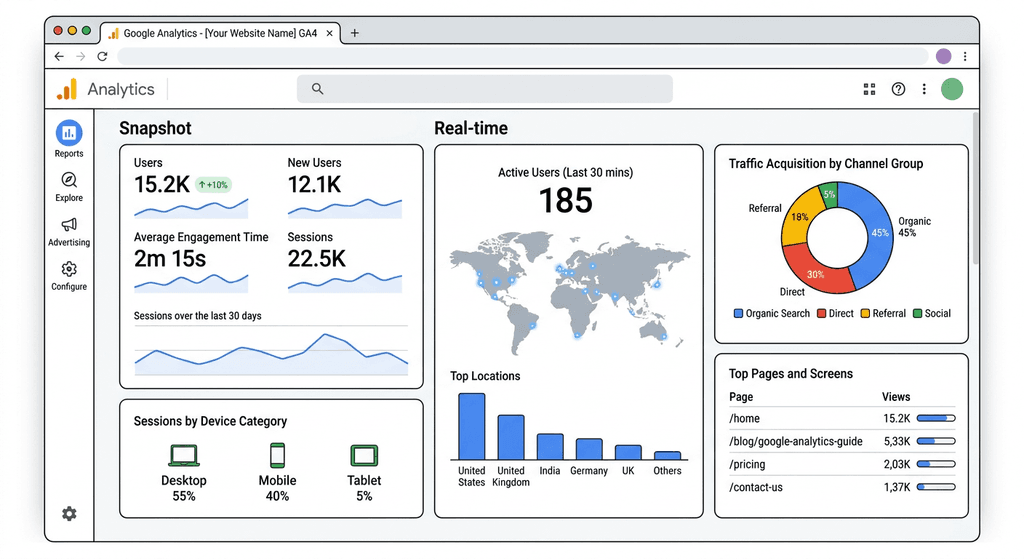
10. You Are Not Tracking What Happens After Someone Visits Your Website
You cannot effectively improve your website if you do not know where the problems are.
Many businesses only look at one number:
Website traffic.
However, traffic alone does not tell you why people are not converting.
You should also look at:
- Which pages receive the most traffic?
- Which pages have low engagement?
- Where do visitors leave?
- Which traffic sources generate enquiries?
- Which keywords attract potential customers?
- How many people complete contact forms?
- How many visitors call your business?
- Which pages generate leads?
This information can help you identify where your website is losing potential customers.
For example:
High traffic but no enquiries
You may be attracting the wrong audience or your call to action may be weak.
Visitors leave a service page quickly
Your content may not match their search intent, or the page may not clearly explain your service.
People start but do not complete your contact form
Your form may be too complicated.
Tracking and testing can help you make decisions based on actual user behaviour rather than assumptions.
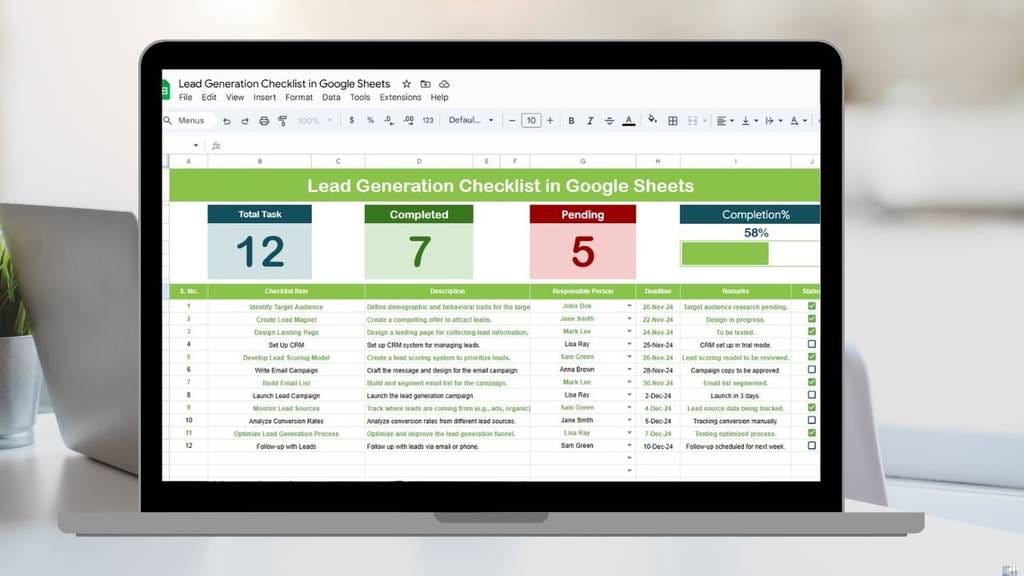
How Do I Get More Leads From My Website?
If your website is not generating leads, avoid immediately assuming you need a completely new website.
Start by identifying where the problem is.
A practical approach is to review:
1. Traffic Quality
Are you attracting potential customers?
2. Search Intent
Does your content match what people are actually looking for?
3. Website Messaging
Do visitors immediately understand what you offer?
4. User Experience
Is your website easy to navigate?
5. Trust
Are you giving people enough reasons to choose your business?
6. Calls to Action
Are you clearly telling visitors what to do next?
7. Technical Performance
Is your website fast, mobile-friendly and functioning correctly?
Improving these areas can help turn your website from an online brochure into a more effective business asset.
Your Website Should Do More Than Just Look Good
A professional website is important.
But for a growing business, the real question is:
Is your website helping you attract and convert potential customers?
If you are getting visitors but not enquiries, the issue may be hiding in your traffic strategy, website design, messaging, user experience or conversion process.
The good news is that these problems can usually be identified and improved.
At Signal Growth Partners, we help businesses build and improve websites designed around visibility, user experience and business growth. Our approach combines SEO-driven web design, search optimisation and digital marketing strategies to help businesses attract the right audience and turn more visitors into potential customers.
Not sure why your website is not generating leads?
Speak to Signal Growth Partners about improving your website’s performance, visibility and ability to convert visitors into enquiries.
Get a Website Growth Consultation
Frequently Asked Questions
If your website is receiving traffic but not generating leads, you may be attracting the wrong audience or failing to convert relevant visitors. Common problems include unclear messaging, weak calls to action, poor user experience, slow pages and a lack of trust signals.
Start by improving traffic quality, clearly explaining your services, addressing customer pain points and making it easy for visitors to contact you. Your website should also include strong calls to action, trust signals and a simple contact process.
SEO can help generate more leads by improving your visibility for searches made by potential customers. However, rankings alone are not enough. Your website must also provide a good user experience and encourage visitors to take action
Not necessarily. Sometimes improving your website’s messaging, calls to action, content, speed and user experience may produce better results without a complete redesign. However, an outdated or poorly structured website may require more significant improvements.
Visitors may leave because they cannot quickly find what they need, do not understand your services, do not trust the business or do not see a clear reason to take the next step. Analysing user behaviour can help identify where potential customers are dropping off.
