
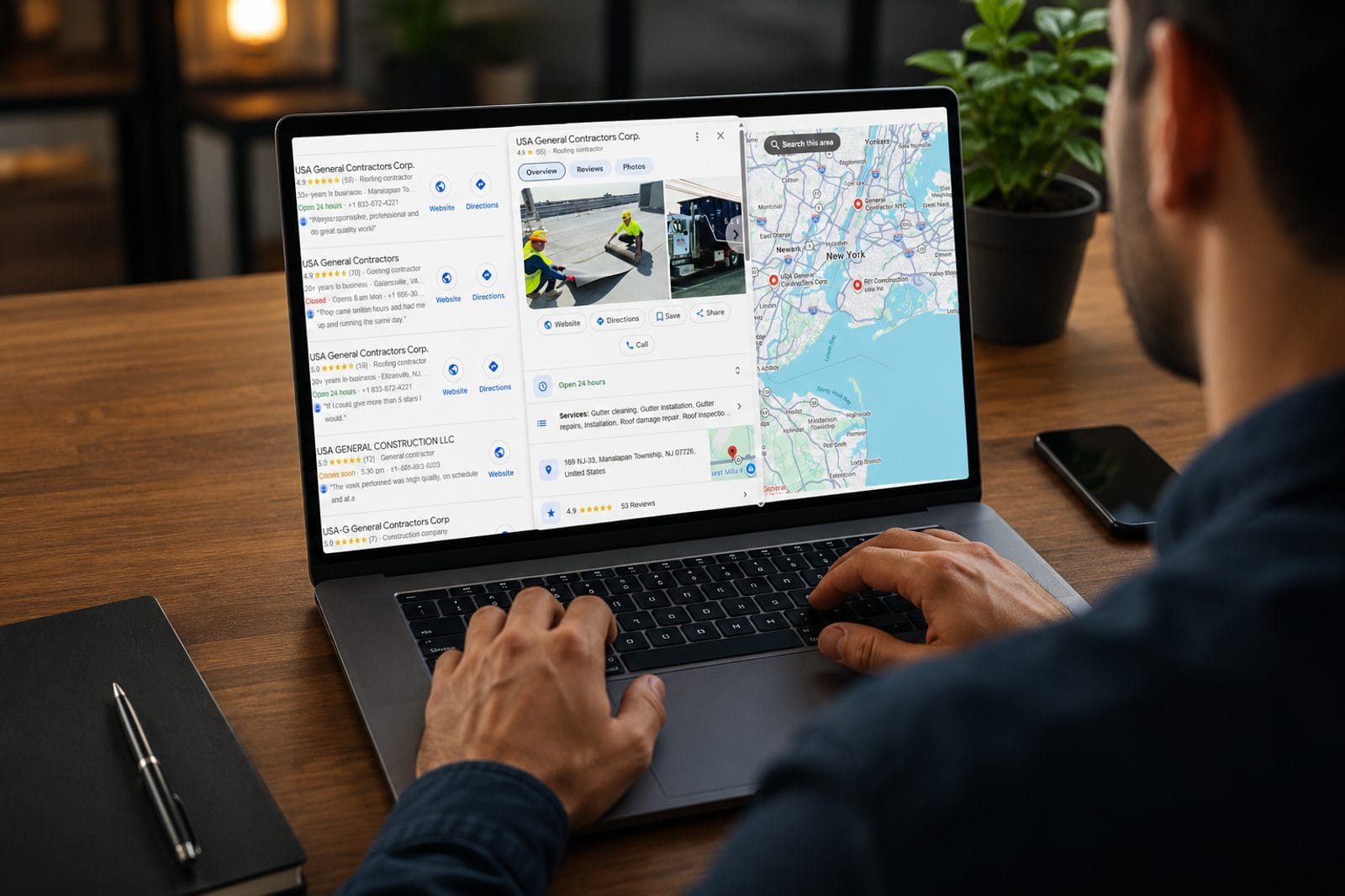
When someone searches “web designer near me,” “accountant in Johannesburg” or “plumber near me,” Google doesn’t simply return a list of websites.
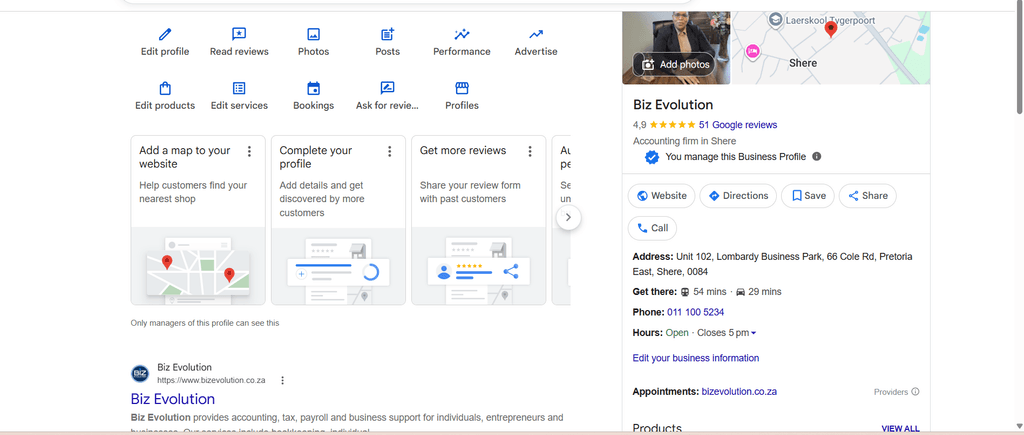
It may show businesses directly in Google Search and Google Maps, including their location, services, opening hours, reviews, photos, website and contact information.
For local businesses, this creates an important opportunity.
You can have an excellent website and still miss potential customers who are searching for your services locally if your Google Business Profile is incomplete, inaccurate or poorly managed.
That’s where Google Business Profile optimisation comes in.
A properly optimised profile helps Google better understand what your business does, where you operate and which searches your business may be relevant to.
But optimisation is about more than adding a logo, address and phone number.
Your profile needs to work together with your website, reviews, business information, local relevance and overall online presence.
In this guide, we’ll explain how to optimise a Google Business Profile, what influences Google Maps visibility, common mistakes to avoid and when professional local SEO support makes sense.
Important: Google does not guarantee a particular position in local search. Google says local results are primarily influenced by relevance, distance and prominence.
What Is a Google Business Profile?
A Google Business Profile (GBP) is Google’s business listing system that allows eligible businesses to manage how their information appears across Google Search and Google Maps.
Depending on the business, customers may see information such as:
- Business name
- Address
- Phone number
- Website
- Opening hours
- Business category
- Services
- Photos
- Reviews
- Location
- Service areas
- Other business attributes
Google also gathers information from other sources, including publicly available websites, third-party data and information contributed by users.
That means your Google Business Profile shouldn’t be treated as an isolated listing.
It is one part of your broader local search presence.
Why Is Google Business Profile Optimisation Important?
Imagine someone in Johannesburg searches:
“SEO agency Johannesburg.”
They may encounter:
- Google Ads
- A local map pack
- Organic search results
- Individual business profiles
- Websites and other search features
The Google Business Profile can therefore become one of the first things a potential customer sees.
A strong profile can help potential customers:
- Discover your business
- Understand what you offer
- Find your location
- Visit your website
- Call your business
- Read customer reviews
- See photos of your business
- Compare you with other local businesses
Google itself recommends keeping business information complete and accurate, responding to reviews, and adding photos and other relevant information to improve the usefulness of a Business Profile.
But there is an important distinction:
Having a Google Business Profile doesn’t automatically mean you’ll rank highly.
Optimisation improves the information Google has available to understand and match your business. It doesn’t guarantee a number-one position.
How Google Maps Business Ranking Works
One of the biggest misconceptions about local SEO is that there is a single trick that gets a business to the top of Google Maps.
There isn’t.
Google states that local results are primarily based on three factors:
1. Relevance
How closely does your business match what someone is searching for?
For example, if someone searches for:
“Google Ads agency Johannesburg”
Google needs to determine which businesses are actually relevant to that search.
Your categories, services, business information, website and other signals can help Google understand your business.
2. Distance
How close is your business to the person searching?
This is particularly important for searches containing terms such as:
- Near me
- In Johannesburg
- Near Sandton
- Near Pretoria East
Google considers the searcher’s location and the location associated with the business.
3. Prominence
Prominence relates to how well-known or established a business is.
Google says prominence can be influenced by information such as websites linking to a business and its reviews.
This is why Google Maps SEO isn’t simply about filling in your profile once and forgetting about it.
Local visibility is connected to your broader online presence.
How to Optimise Your Google Business Profile
1. Claim and Verify Your Business Profile
Before optimising anything, make sure you have control of your legitimate Business Profile.
Verification helps Google establish that you’re authorised to represent the business.
If you have an existing profile, check whether:
- You have owner access
- The correct business is listed
- There are duplicate profiles
- The business information is accurate
- Previous owners or agencies still have access
Don’t create multiple profiles simply because you want to target different keywords or locations.
Google’s Business Profile policies require businesses to accurately represent themselves and comply with its guidelines. Violations can result in restrictions or suspension.
2. Use Your Real Business Name
This is one of the areas where businesses sometimes try to manipulate local SEO.
For example, a company called:
Signal Growth Partners
shouldn’t change its Google Business Profile name to:
Signal Growth Partners – Best SEO & Web Design Company Johannesburg
just to insert keywords.
Google’s guidelines say the business name should reflect the business’s real-world name. Adding unnecessary information can violate the guidelines and potentially contribute to suspension.
The rule is simple:
Optimise the profile — don’t manipulate the business name.
3. Choose the Right Primary Category
Your primary category is extremely important.
It helps Google understand what your business actually is and can influence which searches your business is eligible to appear for.
Google recommends selecting the category that best represents the business and choosing the most specific relevant category available.
For example, don’t select categories simply because you want to rank for those keywords.
Instead ask:
“What is this business primarily?”
Then select the closest legitimate category.
You can also use relevant additional categories where appropriate.
Don’t turn categories into a keyword strategy
Adding every remotely related category can actually make your profile less accurate.
Your categories should represent your actual business.
4. Complete Your Business Information
One of the simplest Google Business Profile optimisation opportunities is also one of the most commonly overlooked:
Complete the profile properly.
Check that you have accurate:
- Business name
- Address
- Phone number
- Website
- Opening hours
- Special hours
- Business category
- Service areas
- Business attributes
- Services
Google recommends keeping business information complete and accurate because this helps it understand what your business does and how customers can interact with it.
Don’t leave important fields blank simply because they’re optional.
If the information is relevant to customers, provide it.
5. Write a Useful Business Description
Your business description should answer three basic questions:
What do you do?
Who do you help?
What makes your business useful or different?
Don’t write a paragraph that simply repeats keywords.
For example, instead of:
SEO company Johannesburg SEO services Johannesburg SEO agency Johannesburg local SEO Johannesburg SEO expert Johannesburg…
write something that actually helps a customer understand the business.
Your description should be natural, specific and customer-focused.
Google’s guidelines allow businesses to describe their services, products, mission and history, but prohibit promotional content such as sales, prices and special offers in the description. Google also limits the description to 750 characters.
Think useful information first. Keywords second.
6. Add Your Services
If your business offers services, don’t overlook the Services section.
Depending on your business category, Google can display services directly on your Business Profile.
Customers may be able to browse your services from the profile, and Google says relevant services may be highlighted when customers search for an offering you provide.
For example, a digital marketing agency might have services such as:
- SEO services
- Local SEO
- Google Ads
- Website design
- Social media marketing
- E-commerce website design
The important point is that these should be real services your business actually provides.
Don’t use the Services section as a place to dump every possible keyword.
7. Add High-Quality Business Photos
Photos can help customers understand your business before they ever visit your website or contact you.
Depending on your business, consider adding:
- Exterior photos
- Interior photos
- Team photos
- Photos of people at work
- Products
- Completed projects
- Equipment
- Branded business assets
Google recommends clear, well-lit images that accurately represent the business and warns against excessive alterations or filters.
For a service business, photographs showing the people behind the business and the work being done can be particularly useful.
Your profile shouldn’t look abandoned.
8. Build a Review Strategy
Reviews are one of the strongest trust signals on a local business profile.
They help potential customers answer a critical question:
“Can I trust this business?”
Google also says review count and positive ratings can contribute to local ranking.
But don’t try to manufacture reviews.
Instead, create a legitimate process for requesting feedback from customers who have actually used your business.
For example:
Customer → Service → Follow-up → Review request
And don’t stop once you have ten reviews.
A sustainable review strategy should become part of your customer experience.
9. Respond to Your Reviews
Getting reviews is only half the job.
Respond to them.
Thank customers for positive feedback and respond professionally to negative reviews.
This demonstrates that the business is active and takes customer feedback seriously.
It also gives potential customers additional information about how you communicate.
Don’t use every response as an opportunity to insert keywords.
Write for the customer.
10. Keep Your Profile Active
Your Google Business Profile shouldn’t be treated like a digital business card that you create once and abandon.
Depending on your business and Google’s available features, you can use profile content such as posts and updates to communicate useful information.
Potential content could include:
- New services
- Company updates
- Educational content
- Events
- New products
- Seasonal information
- Frequently asked questions
- Important announcements
The goal isn’t to publish something for the sake of activity.
The goal is to provide useful information that supports the customer journey.
11. Connect Your Google Business Profile to Your Website
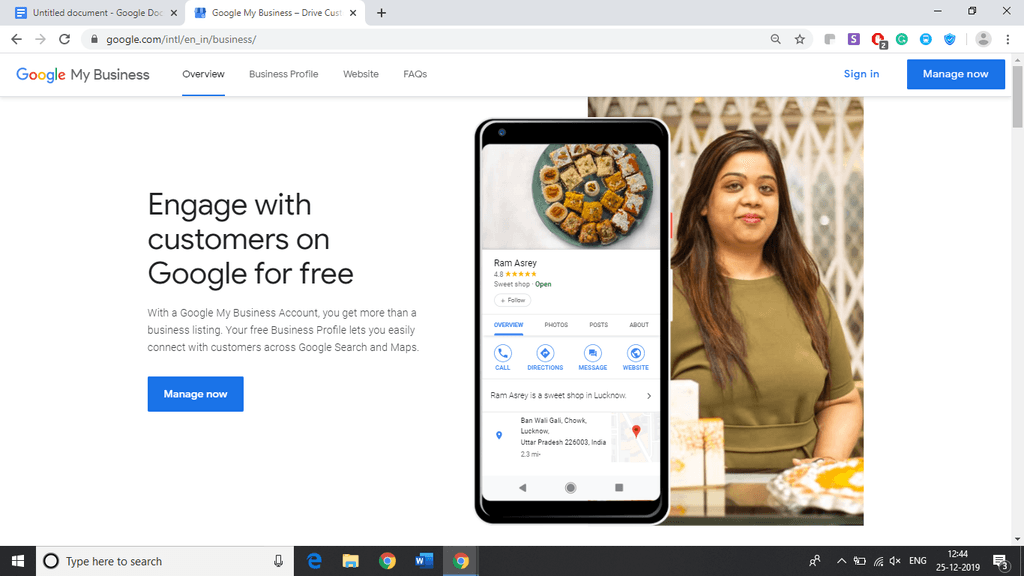
Your Google Business Profile and website should reinforce each other.
Your profile may link visitors to your website, while your website provides Google with additional information about your business.
Google says information used in local search can come from publicly available web content, including a business’s official website.
This creates an important relationship:
Google Business Profile + Website + Local SEO
For example, if your profile says you provide:
Local SEO services in Johannesburg
your website should make it clear that you actually provide those services and explain them in detail.
This is one reason Google Business Profile optimisation shouldn’t be treated as completely separate from SEO.
12. Keep Your Business Information Consistent
Your business information should be consistent across your important online properties.
Pay particular attention to:
NAP:
- Name
- Address
- Phone number
Check your information across:
- Website
- Google Business Profile
- Business directories
- Social media
- Industry directories
- Other important local listings
Inconsistencies can create confusion for customers and search engines.
For example:
Website:
Signal Growth Partners
Google:
Signal Growth Partners
Directory:
Signal Growth Partners Digital Agency
The issue isn’t simply the wording.
You want your business identity and contact information to be clear and trustworthy across the web.
13. Make Your Location and Service Area Clear
Not every business operates from a customer-facing physical location.
Some businesses serve customers at their location or operate as service-area businesses.
Your Business Profile should accurately represent how your business operates.
Don’t create fake offices in multiple suburbs just to try to rank in those locations.
And don’t use virtual addresses simply as a shortcut to local rankings.
Your location information should reflect the actual business.
This matters because distance is one of the factors Google considers when determining local search results.
14. Build Your Local Authority Beyond Google
This is where Google Business Profile optimisation starts becoming Local SEO.
Your Google profile isn’t the entire local search strategy.
Your broader online presence can also matter.
Consider:
- Relevant local directories
- Industry associations
- Local publications
- Community websites
- Partnerships
- Local PR
- Quality backlinks
- Helpful local content
- Location-specific service pages
- Consistent business information
Google says prominence can be influenced by information from across the web, including links and reviews.
This is why businesses that want sustained local visibility often need more than profile optimisation alone.
What Affects Your Google Maps Visibility?
There isn’t a magic “Google Maps ranking setting.”
Instead, think about your local search presence as a combination of signals.
| Area | What to focus on |
|---|---|
| Relevance | Categories, services and accurate business information |
| Distance | Real business location and service area |
| Prominence | Reviews, links and broader online presence |
| Trust | Accurate information and customer feedback |
| Website | Useful, relevant local content |
| Profile quality | Complete and accurate information |
| Customer experience | Reviews, enquiries and conversions |
| Local authority | Relevant mentions and links |
Google specifically identifies relevance, distance and prominence as the main factors behind local results.
Common Google Business Profile Mistakes
Keyword stuffing the business name
Don’t add keywords to your business name simply because you want to rank.
Choosing irrelevant categories
More categories don’t automatically mean more visibility.
Creating fake locations
Don’t create profiles for locations where your business doesn’t legitimately operate.
Ignoring reviews
A profile with unanswered reviews can create a poor customer impression.
Using poor-quality images
Blurry, outdated or irrelevant photos don’t help customers understand your business.
Having incomplete information
Missing services, hours or contact information can make the profile less useful.
Creating the profile and forgetting about it
Local SEO isn’t a “set it and forget it” strategy.
Focusing only on the profile
Your website and broader local authority matter too.
Why Your Business May Not Be Showing on Google Maps
If your business isn’t appearing where you expect it to, don’t immediately assume that your profile is “broken.”
There could be several reasons.
Your profile isn’t verified
Verification is an important first step.
Your information isn’t complete
Google needs enough accurate information to understand your business.
Your category doesn’t accurately represent your business
The wrong primary category can affect relevance.
Your business is too far from the searcher
Distance is a fundamental part of local search.
Competitors have stronger prominence
Other businesses may have more reviews, stronger websites, more links or greater recognition.
Your website has weak local relevance
Your profile and website should support the same overall business identity.
Your profile violates Google’s guidelines
Policy problems can lead to restrictions or suspension.
Google states that businesses whose profiles violate its guidelines may have their profile restricted or suspended.
Google Business Profile Optimisation vs Local SEO
This distinction is important.
Google Business Profile optimisation focuses primarily on improving your presence within your Business Profile and Google Maps/Search local results.
It can include:
- Google Business Profile optimisation
- Website SEO
- Local keyword research
- Location pages
- Technical SEO
- NAP consistency
- Citations
- Reviews
- Local link building
- Content
- Schema
- Competitor analysis
- Local search tracking
Think of it this way:
Your Google Business Profile is one important part of your local SEO strategy — not the entire strategy.
That’s why a business can have a beautifully optimised profile and still struggle to compete in a competitive Johannesburg search.
When Should You Hire a Professional for Google Business Profile Optimisation?
You don’t necessarily need an agency just to create a Google Business Profile.
But professional help can make sense when:
- Your profile isn’t appearing for important searches
- Your competitors consistently outrank you
- Your profile has incorrect information
- You’ve inherited an old or poorly managed profile
- You’re dealing with duplicates
- Your profile has been suspended
- You operate across multiple locations
- You need stronger local SEO
- You want to generate more qualified local enquiries
- You don’t have time to manage the profile yourself
The biggest benefit isn’t simply someone “filling in the profile.”
It’s understanding how the profile fits into your overall local search strategy.
Google Business Profile Optimisation in South Africa
For South African businesses, local search can be particularly valuable because customers often search using a combination of service + location.
Examples include:
- Web design Johannesburg
- Accountant Pretoria
- Plumber Sandton
- Dentist Randburg
- Florist Pretoria East
- Digital marketing agency Johannesburg
This means businesses need to think beyond simply ranking for their service.
They need to establish where they operate and why they’re relevant to customers in that market.
For businesses targeting Johannesburg, for example, a strong local SEO strategy may combine Google Business Profile optimisation with location-focused website content and broader authority-building.
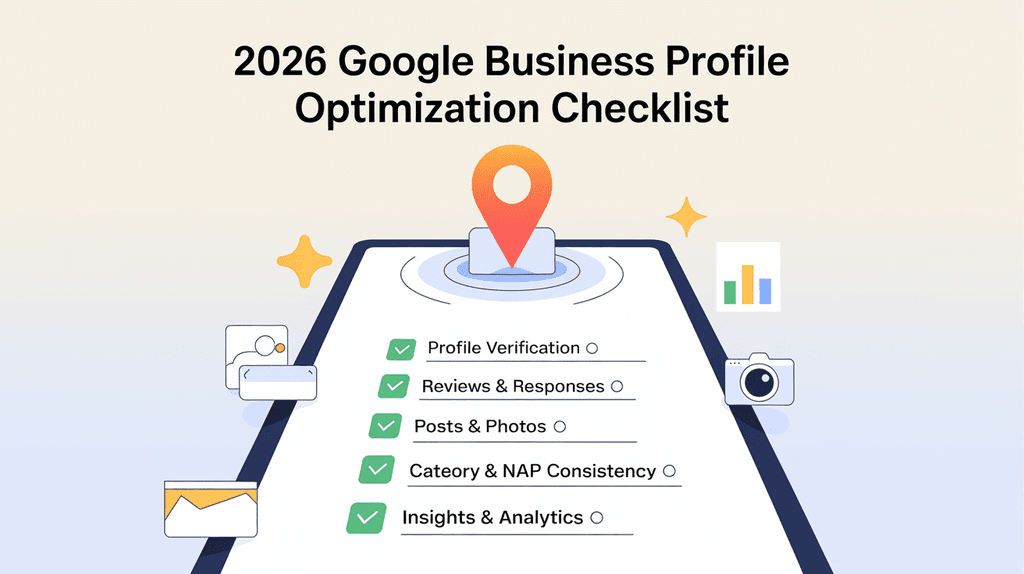
A Practical Google Business Profile Optimisation Checklist
Before considering your profile optimised, check:
Business information
- Business name is accurate
- Profile is verified
- Phone number is correct
- Website is correct
- Opening hours are accurate
- Special hours are updated
Local relevance
- Correct primary category
- Relevant additional categories
- Services added
- Accurate service area
- Accurate business location
Content
- Business description is useful
- Relevant photos uploaded
- Photos accurately represent the business
- Useful updates/posts where appropriate
Reputation
- Customers are encouraged to leave genuine reviews
- Reviews receive professional responses
- Negative feedback is handled appropriately
Website
- Website information matches the profile
- Local service pages exist where appropriate
- Contact information is consistent
- Website clearly explains services and locations
- Website supports the same business identity
Local SEO
- Important local directories are accurate
- Business information is consistent
- Relevant local links/mentions are being developed
- Local search performance is being monitored
The Bottom Line
Google Business Profile optimisation isn’t about finding a secret trick to rank number one on Google Maps.
It’s about making your business easier for Google to understand and easier for customers to trust.
Start with the fundamentals:
Accurate information → Relevant categories → Useful services → Quality photos → Genuine reviews → Strong website → Consistent local presence.
Then build from there.
Google’s own guidance makes an important point: there is no way to pay for a better organic local ranking. Local results are primarily determined by relevance, distance and prominence.
So if your business isn’t getting the visibility you want, don’t look for a shortcut.
Build a stronger local presence.
Need More Than Google Maps Optimisation?
If you’ve already optimised your Google Business Profile but still aren’t getting enough visibility, the problem may be bigger than your profile.
Your website, local content, technical SEO, reviews, citations, links and overall online authority all contribute to your ability to compete in local search.
Signal Growth Partners helps Johannesburg businesses build stronger local search visibility through a combination of Google Business Profile optimisation and Local SEO.
Want to improve your visibility in local search?
Explore our Local SEO Services in Johannesburg and see how we can help your business build a stronger presence across Google Search and Google Maps.
