


If you’re planning to sell products online, one of the first questions you’re likely asking is: how much does an ecommerce website cost in South Africa?
The honest answer is that there isn’t one fixed price.
A basic online store can cost significantly less than a professionally designed ecommerce website with custom functionality, dozens or hundreds of products, payment gateways, delivery integrations, SEO and marketing systems.
In 2026, a realistic budget for a professionally built South African ecommerce website is often around R7,500 to R80,000+, while larger or highly customised ecommerce projects can go beyond R100,000 or R150,000 depending on what needs to be built. Current South African market examples support this broad range, although individual quotes vary considerably.
The important question, however, isn’t simply:
“How cheap can I get an ecommerce website?”
It’s:
“What does my online store actually need to sell successfully?”
That distinction can make a significant difference to your total investment.
Ecommerce website cost in South Africa at a glance
As a general 2026 planning guide:
| Ecommerce website type | Typical cost |
|---|---|
| DIY / template-based store | R3,000 – R10,000+ |
| Starter professional store | R8,000 – R40,000 |
| Professional ecommerce website | R40,000 – R80,000 |
| Custom ecommerce website | R80,000 – R150,000+ |
| Large / complex ecommerce platform | R150,000+ |
These are planning ranges rather than fixed industry prices.
A developer charging R15,000 and an agency charging R60,000 may both be quoting fairly if they are delivering completely different levels of strategy, design, functionality, support and customisation.
That’s why comparing the final number without comparing what is included can be misleading.
What actually determines the cost of an ecommerce website?
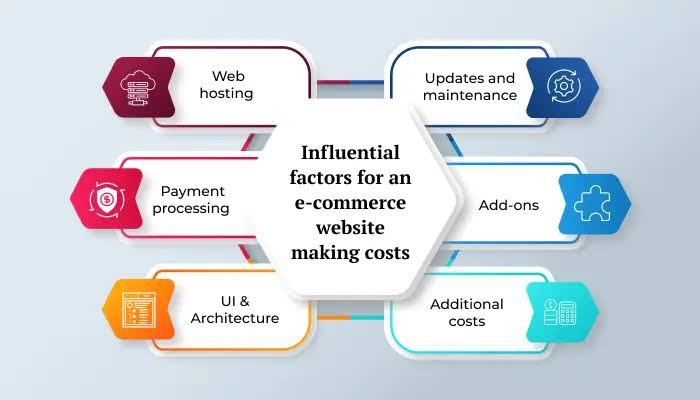
The biggest mistake businesses make is assuming that ecommerce website pricing is based mainly on the number of pages.
An online store is different from a normal business website.
It needs to handle products, customers, payments, orders, stock, shipping and potentially marketing integrations.
Several factors can therefore affect the final price.
1. Number of products
A store selling five products is very different from one selling 500.
A small catalogue may require relatively straightforward setup.
A larger catalogue may require:
- Product categories
- Product variations
- Filters
- Search functionality
- Bulk product imports
- Stock management
- Product attributes
- Multiple pricing options
- More extensive product photography
- SEO optimisation for product pages
If you’re selling hundreds or thousands of products, the time required for planning, configuration and testing increases significantly.
2. Design and branding
There is a major difference between installing a theme and creating an ecommerce experience around your brand.
A template-based store may use an existing layout with relatively limited customisation.
A professionally designed store may involve:
- Custom layouts
- Brand implementation
- Mobile-first design
- Conversion-focused product pages
- Custom navigation
- Product filtering
- Custom calls-to-action
- Trust elements
- Checkout optimisation
- User experience testing
Your website is effectively your online shopfront.
If customers don’t trust it, understand it or know what to do next, having an attractive design isn’t enough.
3. Ecommerce platform
Your choice of platform can affect both the initial development cost and your ongoing expenses.
Two of the most common options businesses consider are WooCommerce and Shopify.
WooCommerce
WooCommerce is an open-source ecommerce platform built for WordPress.
The core platform itself is free, but that doesn’t mean a WooCommerce store is free to operate.
You’ll typically need to budget for:
- WordPress hosting
- Domain
- SSL/security
- Premium plugins
- Payment gateway
- Shipping integrations
- Website maintenance
- Development work
- Backups
- Performance optimisation
WooCommerce itself currently describes the core platform as free, while noting that hosting, extensions and payment processing contribute to the overall cost. Its current guidance puts hosting for many stores at roughly US$25–$350 per month, depending on requirements. WooCommerce
Shopify
Shopify takes a different approach.
It is a hosted ecommerce platform, meaning much of the technical infrastructure is managed for you.
Shopify’s current plans include Basic, Grow and Advanced, with pricing beginning at US$29/month when billed annually on its global pricing page. Its South African site currently displays region-specific information and pricing in USD.
That can make Shopify attractive to businesses looking for a more managed platform.
However, you still need to consider:
- Shopify subscription
- Theme/design costs
- Apps
- Payment processing
- Development
- Custom functionality
- Marketing
- Maintenance or support
So don’t compare WooCommerce’s “free” core platform directly with Shopify’s subscription and assume one is automatically cheaper.
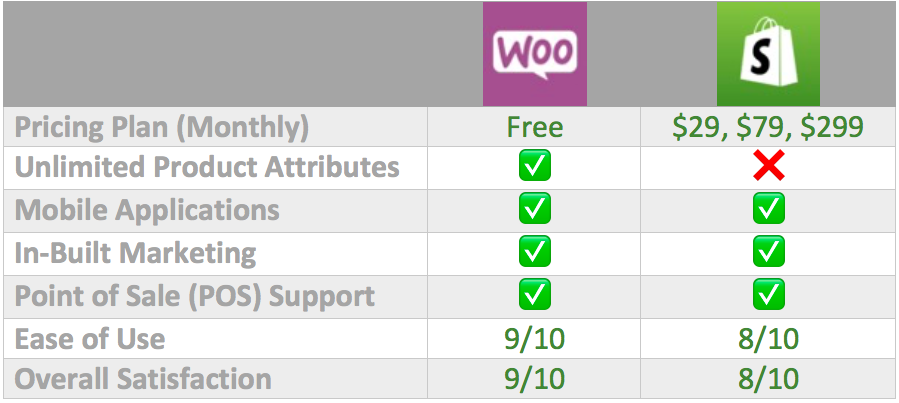
WooCommerce vs Shopify: which costs less?
There isn’t a universal winner.
| Factor | WooCommerce | Shopify |
|---|---|---|
| Core platform | Free | Monthly subscription |
| Hosting | Separate | Included |
| Flexibility | Very high | High |
| Plugins/apps | Often required | Often required |
| Technical maintenance | More responsibility | More managed |
| Customisation | Excellent | Excellent, with platform constraints |
| Best suited to | Businesses wanting control | Businesses wanting simplicity |
| Long-term cost | Depends on setup | Depends on plan/apps/sales |
WooCommerce gives you more control over where your money goes, while Shopify bundles more of the infrastructure into the platform. WooCommerce explicitly states that it does not charge a platform revenue share, while Shopify’s pricing depends on its subscription and payment arrangements.
The right choice depends on your business, not simply which platform has the lowest advertised price.
What should be included in an ecommerce website?
When comparing quotes, don’t only ask:
“How much is the website?”
Ask:
“What am I actually getting for that price?”
A professional ecommerce project may include:
Website structure
- Homepage
- Shop
- Product categories
- Product pages
- About page
- Contact page
- Cart
- Checkout
- Customer account area
Ecommerce functionality
- Product management
- Product variations
- Stock management
- Order management
- Discount codes
- Related products
- Product search
- Product filtering
Payments
Depending on your business and provider, your store may need integration with payment services such as:
- PayFast
- Yoco
- Paystack
- Peach Payments
- Other supported payment providers
Payment gateway charges should be treated as ongoing transaction costs, not as part of the once-off website development fee.
Delivery can also affect your ecommerce website cost
South African ecommerce businesses often need more than an online payment system.
Customers also want to know:
When will my order arrive?
Depending on your business model, you may need:
- Local delivery
- Nationwide courier delivery
- Collection options
- Delivery zones
- Shipping rates
- Free delivery thresholds
- Automated shipping calculations
- Order tracking
Connecting your website to courier or fulfilment systems can increase development costs, particularly where APIs or custom integrations are required.
SEO should be part of the conversation

One of the biggest mistakes is spending R40,000 or R60,000 building an online store and only thinking about SEO afterwards.
Your ecommerce website needs to be discoverable.
That means considering SEO during development rather than trying to bolt it onto the website later.
Important areas include:
- Keyword research
- SEO-friendly URLs
- Product titles
- Product descriptions
- Category pages
- Internal linking
- Image optimisation
- Mobile performance
- Page speed
- Metadata
- Structured data
- Indexation
- XML sitemap
- Canonical URLs
- Content strategy
Google currently supports ecommerce-related structured data and merchant listing experiences that can communicate information such as product pricing, availability, shipping and returns.
Google also updated its documentation in July 2026 to expand guidance around merchant listing Product.category data and sale-price effective dates.
That makes proper ecommerce SEO increasingly important, not simply adding a few keywords to product descriptions.
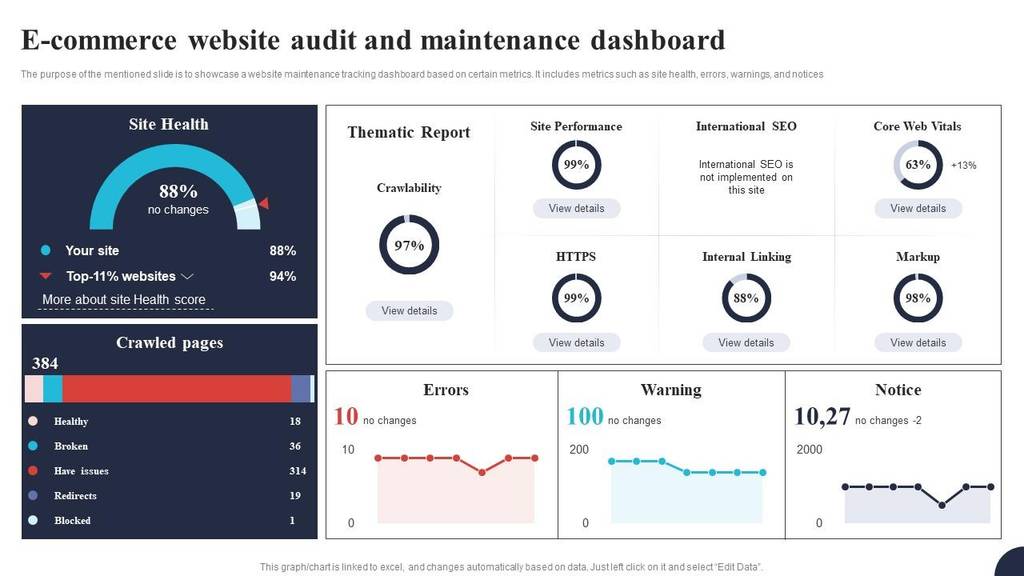
How much does it cost to maintain an ecommerce website?
Your website development quote is only the beginning.
An ecommerce store has ongoing costs.
You may need to budget for:
| Ongoing cost | Typical consideration |
|---|---|
| Domain | Annual renewal |
| Hosting | Monthly/annual |
| Shopify subscription | Monthly |
| Premium plugins/apps | Monthly/annual |
| Payment processing | Per transaction |
| Website maintenance | Monthly/retainer |
| SEO | Monthly |
| Content | Ongoing |
| Advertising | Based on marketing budget |
| Security/backups | Ongoing |
For example, Signal Growth Partners’ current South African website maintenance guide places ecommerce maintenance broadly around R1,500–R5,000+ per month, depending on platform, complexity and support requirements.
This is why your ecommerce budget should include total cost of ownership, not just the development quote.
Why the cheapest ecommerce website isn’t always the cheapest option
Let’s say you receive three quotes:
Quote A: R8,000
Quote B: R30,000
Quote C: R65,000
It may be tempting to choose Quote A.
But what happens if it doesn’t include:
- SEO setup
- Product uploads
- Payment integration
- Courier integration
- Mobile optimisation
- Security
- Backups
- Analytics
- Conversion optimisation
- Support
You could end up paying for those items separately.
Worse, rebuilding an ecommerce website because the original platform cannot support your growth can cost considerably more than planning properly from the beginning.
A cheaper website isn’t necessarily a bad website.
But a cheap quote without understanding the scope can become an expensive project.
DIY ecommerce website vs professionally built store
For some businesses, DIY is perfectly reasonable.
If you’re testing a product idea, have a small catalogue and are comfortable learning the platform, Shopify, WooCommerce and other website builders can allow you to launch without a large upfront development budget.
The trade-off is your time.
You may spend hours figuring out:
- Theme configuration
- Product setup
- Payments
- Shipping
- Mobile layouts
- SEO
- Analytics
- Security
- Troubleshooting
Signal Growth Partners’ guide comparing professional web design with DIY website builders explores this trade-off in more detail.
Professional development becomes more valuable when your website is expected to become a serious sales channel rather than simply an online catalogue.
How much should a small business budget for an ecommerce website?
For a small South African business launching its first online store, I’d suggest thinking in three levels rather than looking for one magic number.
Around R8,000–R40,000
Suitable for a relatively straightforward store with:
- Smaller product catalogue
- Standard ecommerce functionality
- Existing branding
- Standard payment integration
- Limited custom functionality
- Template or semi-custom design
Around R12,000–R80,000
More appropriate for a growing business that wants:
- More professional customisation
- Better user experience
- Stronger SEO foundations
- More products
- Advanced product functionality
- Shipping integration
- Better conversion-focused design
- Analytics and tracking
R20,000+
This is where projects can move into more complex territory.
You may need:
- Custom functionality
- API integrations
- ERP/accounting integration
- CRM integration
- Advanced stock systems
- Multiple payment or delivery systems
- Large product catalogues
- Bespoke customer journeys
- Custom ecommerce workflows
The more systems your store needs to communicate with, the less useful a generic “website price” becomes.
At that point, you’re building a digital commerce system, not simply a website.
What about ecommerce SEO and marketing?
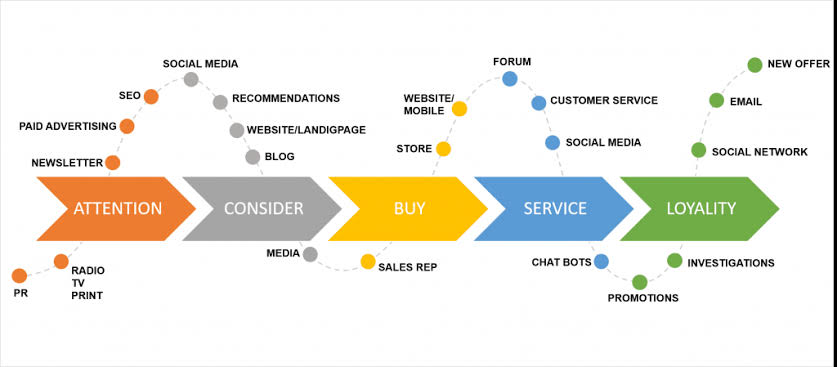
This is another cost businesses often forget.
Building an ecommerce website doesn’t automatically mean customers will find it.
You still need a strategy for attracting buyers.
That could include:
SEO
Useful for building long-term organic visibility.
Google Ads
Useful for reaching people actively searching for products now.
Social media
Useful for product discovery, brand building and remarketing.
Email marketing
Useful for turning existing customers into repeat buyers.
Content marketing
Useful for answering questions and building authority around your products.
This is why your ecommerce website and marketing strategy should ideally be planned together.
For example, Signal Growth Partners’ current approach connects web design, SEO, Google Ads and digital marketing around the wider business objective rather than treating each as an isolated service.
Does an expensive ecommerce website guarantee more sales?
No.
This is important.
A R100,000 website doesn’t automatically outperform a R30,000 website.
The result depends on much more than development cost.
Your sales can be influenced by:
- Product-market fit
- Pricing
- Product quality
- Website usability
- Trust
- Reviews
- Traffic
- SEO
- Advertising
- Conversion rate
- Delivery experience
- Customer service
- Competition
A beautifully designed store with no traffic won’t generate much revenue.
Likewise, a store attracting thousands of visitors but providing a poor checkout experience may struggle to convert.
The goal should therefore be to build a website that is appropriate for your business stage and designed to support growth.
How to compare ecommerce website quotes
Before choosing a developer or agency, ask these questions:
1. What platform will the website use?
WooCommerce? Shopify? Something else?
2. How many products are included?
And who uploads them?
3. Is the design custom or template-based?
4. Is mobile optimisation included?
It should be.
5. Is SEO included?
Ask specifically what “SEO included” means.
6. Are payment gateways included?
7. Is delivery/courier integration included?
8. Who owns the website and domain?
This is particularly important.
9. What happens after launch?
Ask about maintenance, updates, security and support.
10. What isn’t included?
This may be the most important question of all.
A transparent quote should make exclusions clear.
So, how much does an ecommerce website cost in South Africa in 2026?
For most businesses, a sensible starting expectation is around R10,000–R80,000 for a professionally built ecommerce website, while more advanced stores can cost R30,000–R150,000+.
But don’t use those figures as a substitute for a proper project scope.
Your final cost depends on your:
- Number of products
- Ecommerce platform
- Design requirements
- Payment systems
- Delivery requirements
- Integrations
- SEO requirements
- Custom functionality
- Content
- Marketing objectives
- Ongoing support needs
The cheapest way to build an online store isn’t necessarily the cheapest way to build a successful online business.
The better approach is to work out what your customers need, what your business needs now, and what the website needs to support as you grow.
Final takeaway
If you’re researching ecommerce website costs in South Africa, don’t start by asking which company is cheapest.
Start by asking:
What does my business actually need to sell online successfully?
Once you understand that, website quotes become much easier to compare.
A good ecommerce website should not simply give you somewhere to put your products. It should make it easy for customers to discover your products, trust your business, make a purchase and come back again.
And that’s ultimately what you’re investing in—not just a website, but a sales channel.
Planning an ecommerce website? Signal Growth Partners helps South African businesses build websites around usability, SEO, visibility and growth rather than simply creating another online brochure. Explore our ecommerce website design service or get in touch to discuss what your store actually needs
